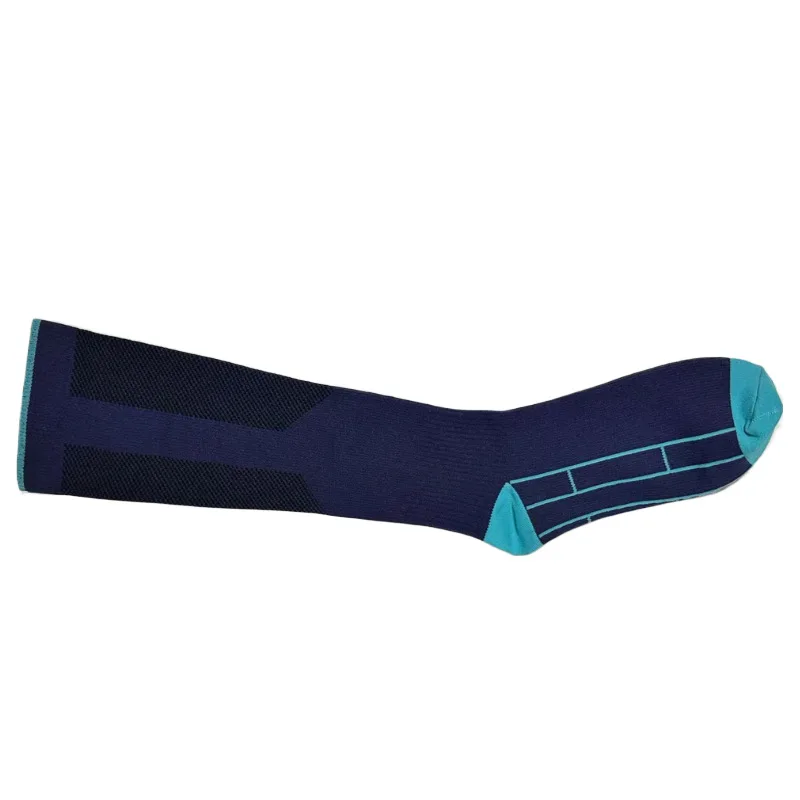
Compression Socks for Sport: What the Evidence Actually Supports
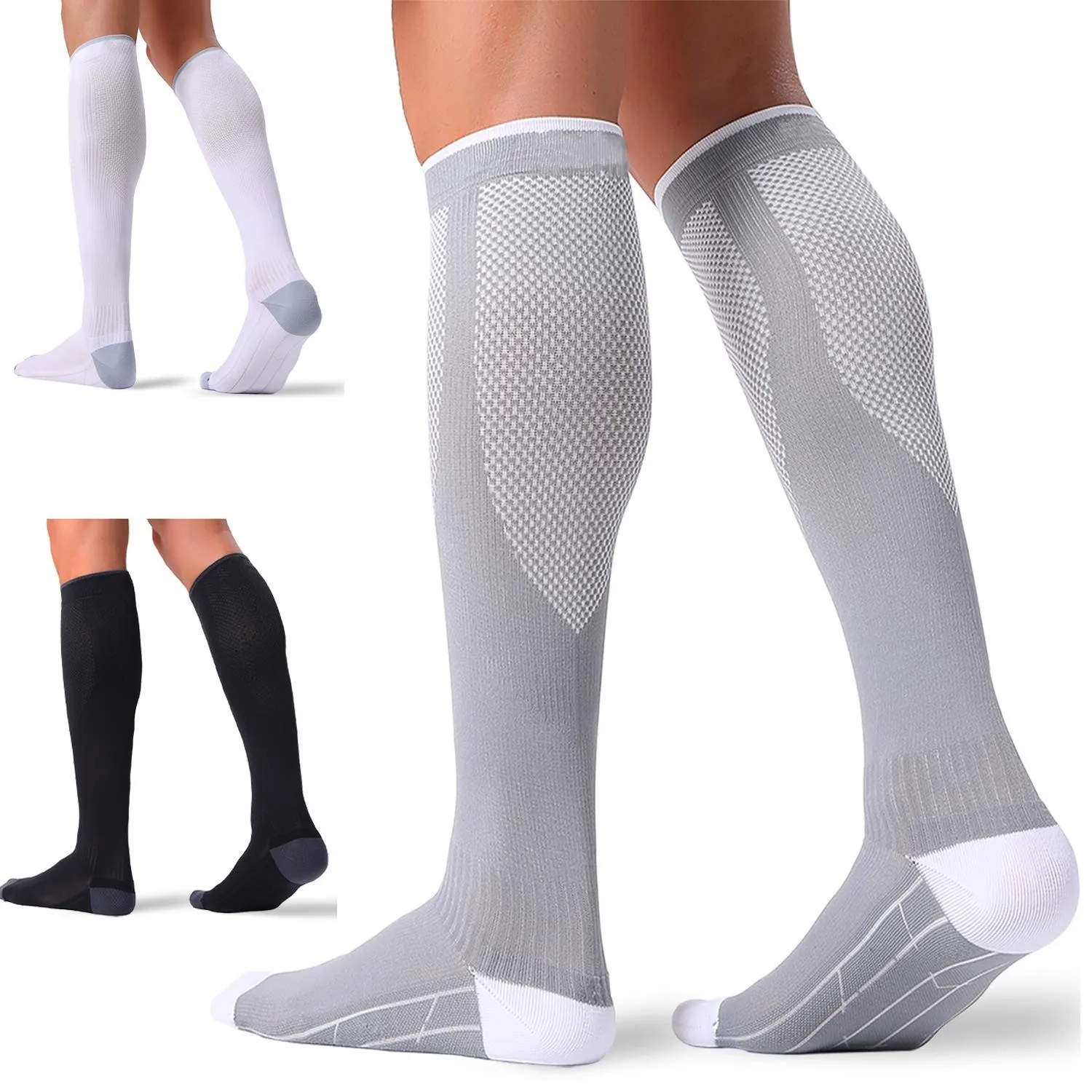
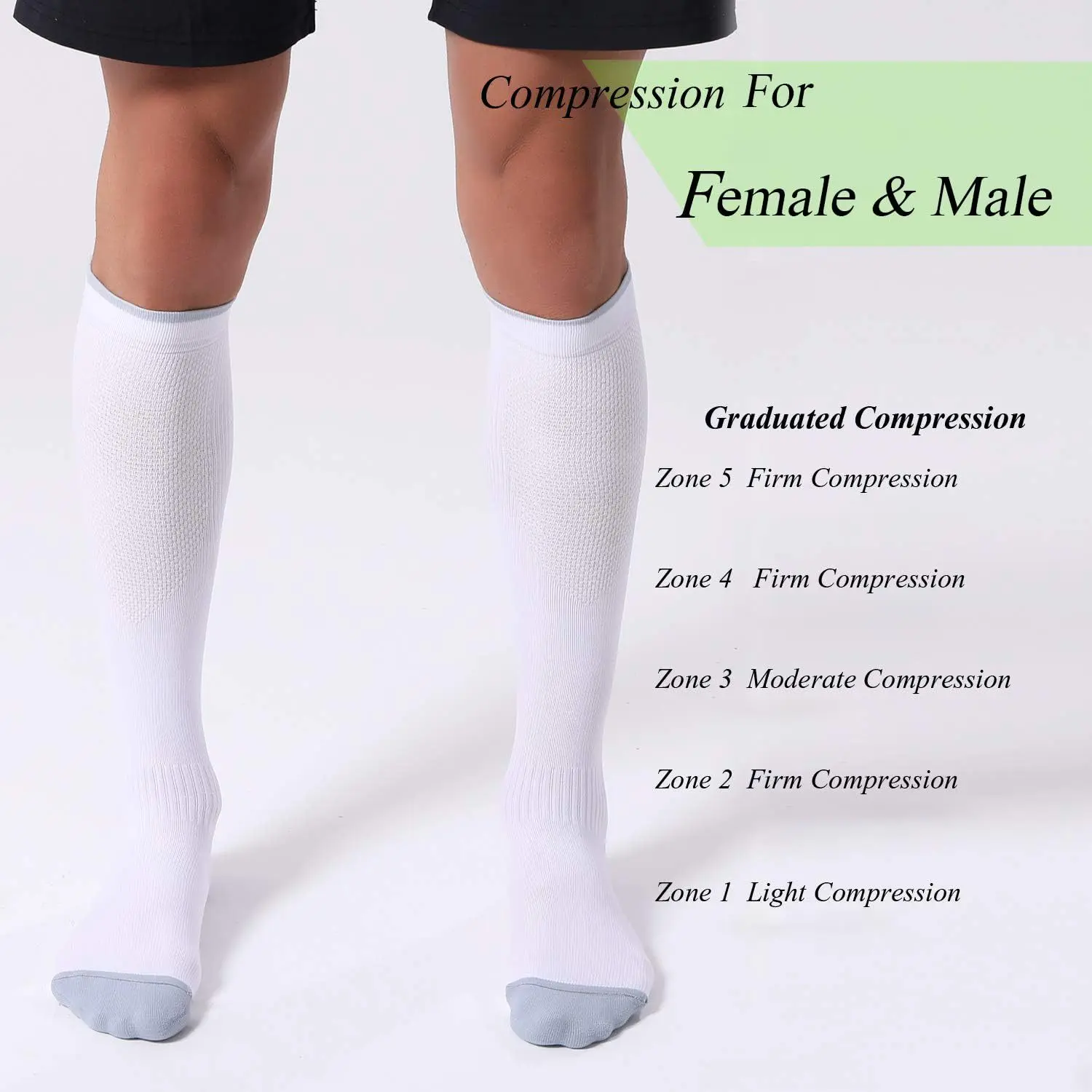
The claim that compression improves running performance has not held up well — most controlled studies find no meaningful change in time-trial results or VO2 max. What does hold up is recovery. Compression reduces the muscle oscillation that occurs on every foot strike, and it assists venous return so metabolic by-products and fluid clear from the working muscle faster. The result that shows up repeatedly in the literature is lower perceived soreness and less swelling in the 24–48 hours after hard exercise. That is a genuinely valuable thing to buy, and it is the reason to buy these.
Key Benefits
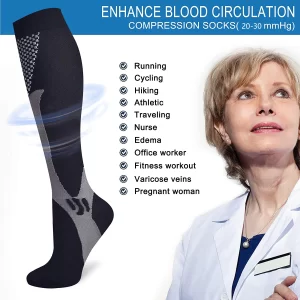
- Less next-day calf soreness. The most consistently replicated benefit of sports compression is reduced DOMS and swelling after long or hard sessions.
- Damps muscle oscillation. Each foot strike sends a shockwave through the calf; a firm sleeve reduces that vibration, which is part of why the muscle fatigues less over distance.
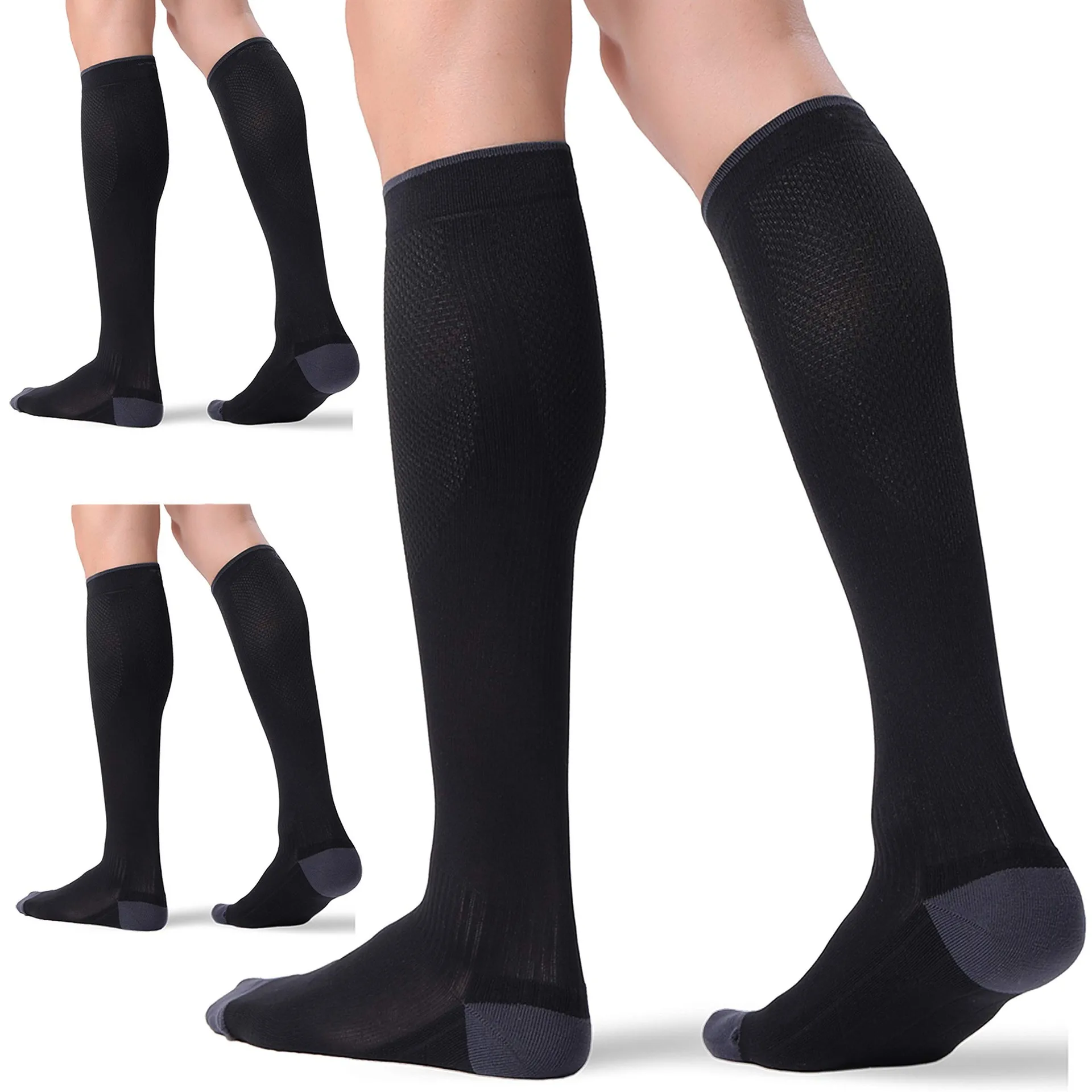
- Full calf coverage for hiking and cycling. Sustained, repetitive lower-leg loading is exactly the scenario where venous return needs the help.
- Useful during pregnancy and long shifts. Any situation with increased venous pressure and long periods upright — though see the safety note below.
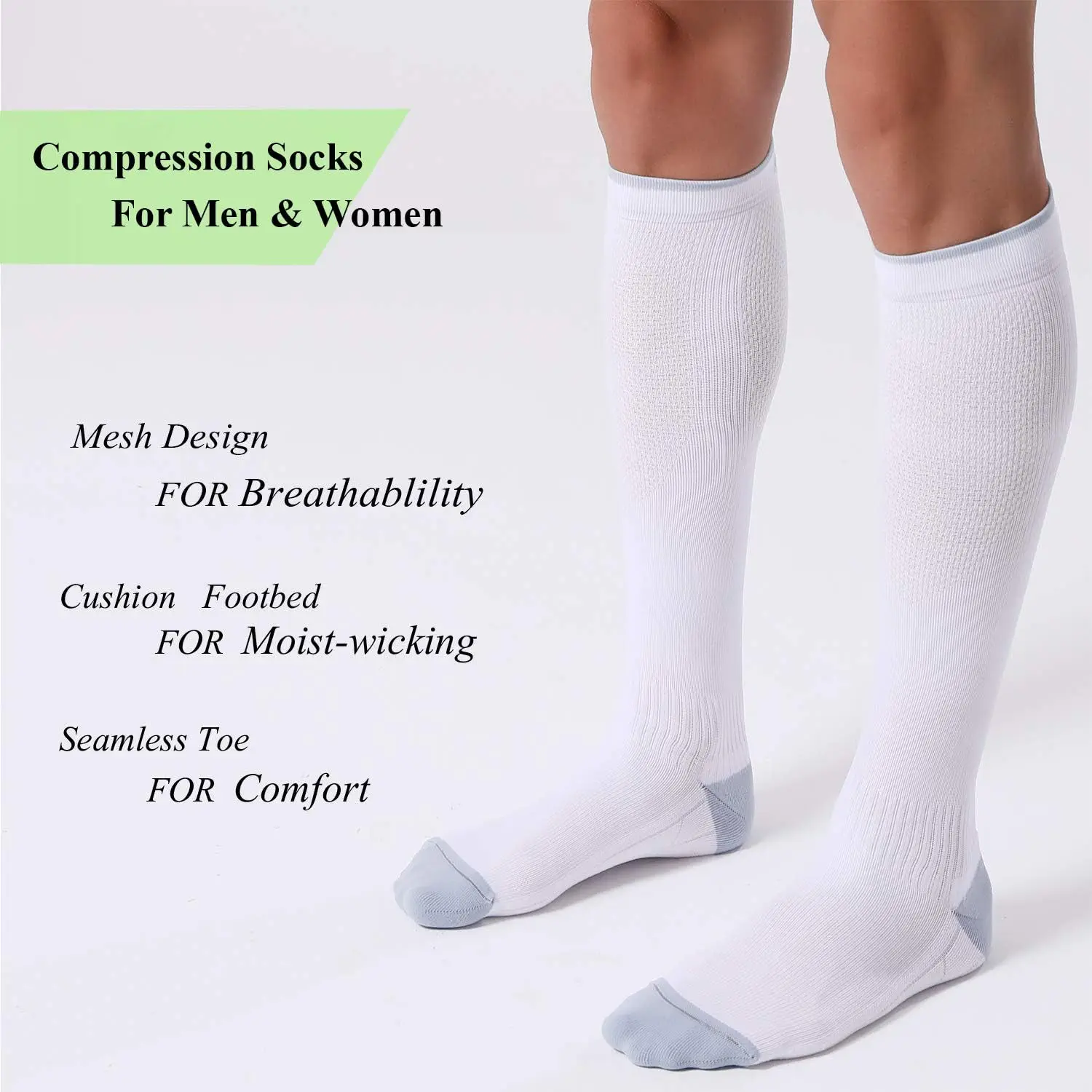
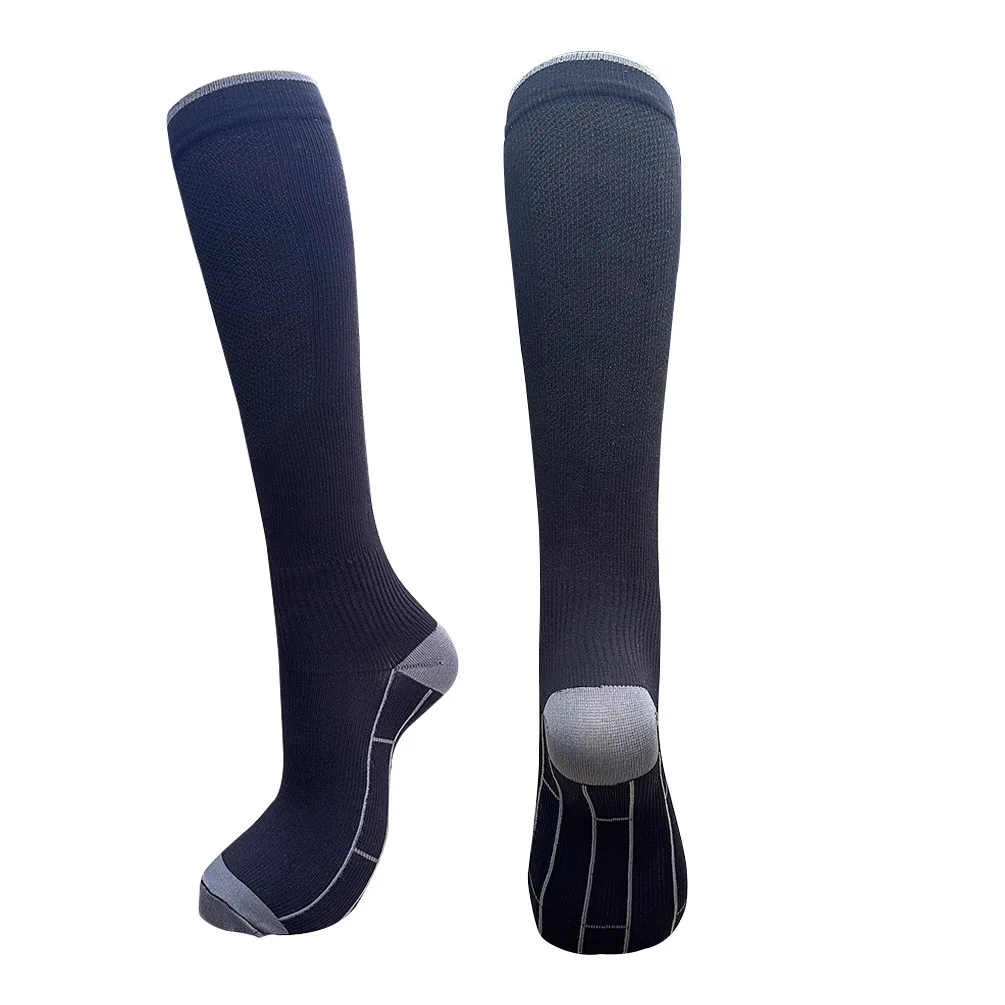
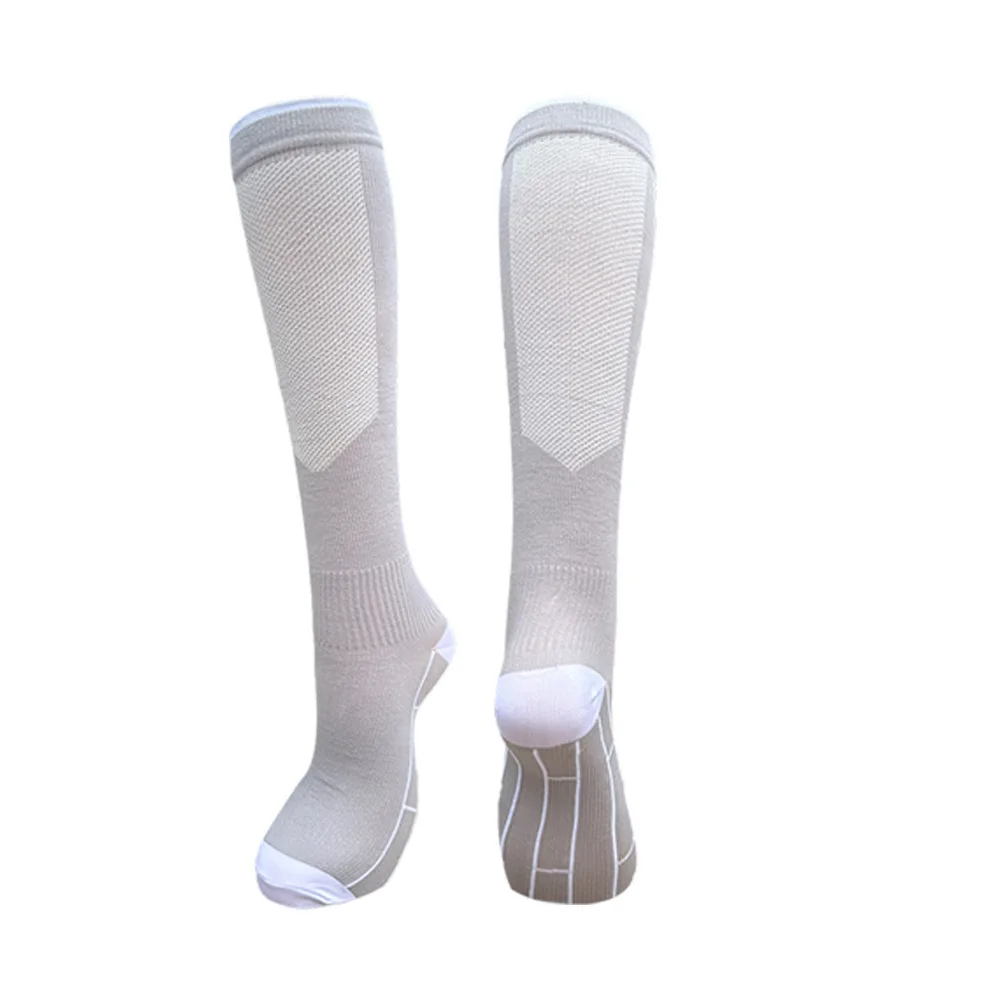
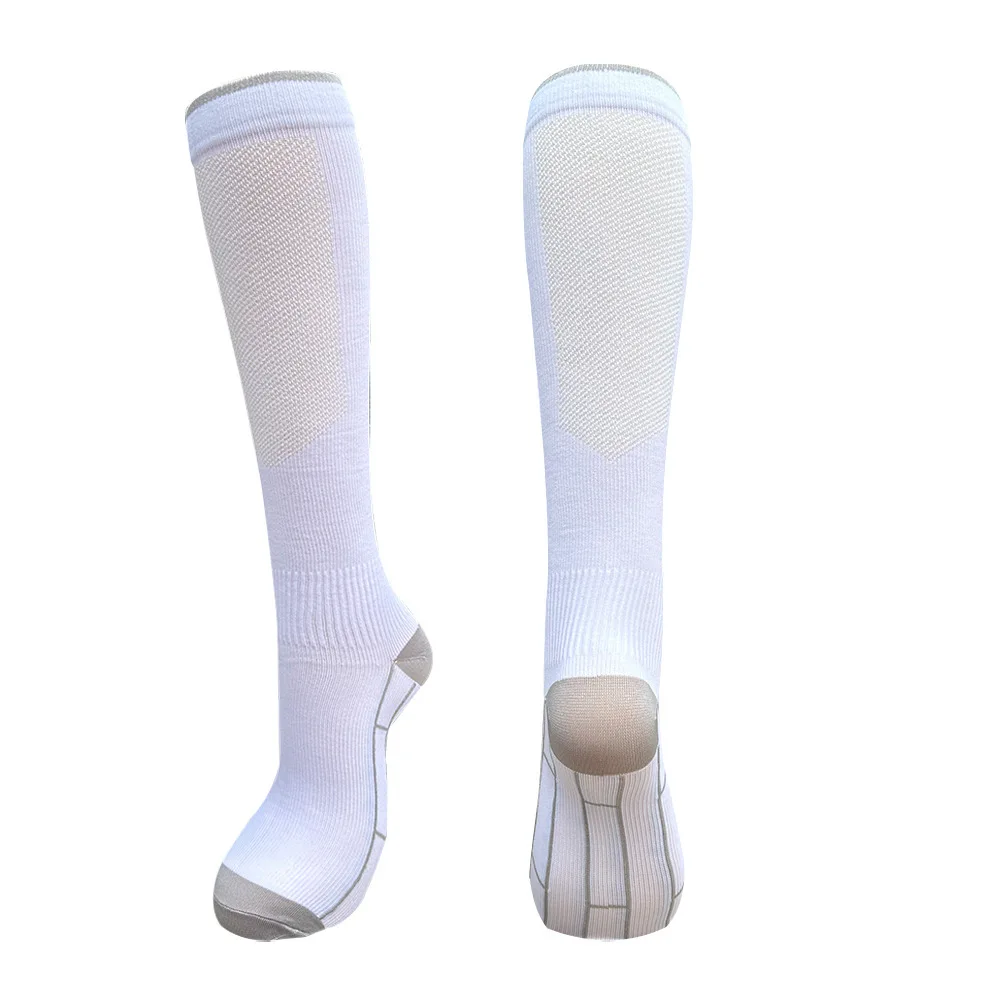
- Moisture-wicking, breathable knit. Compression traps heat by nature; the yarn here is chosen to move sweat out rather than hold it against the skin.
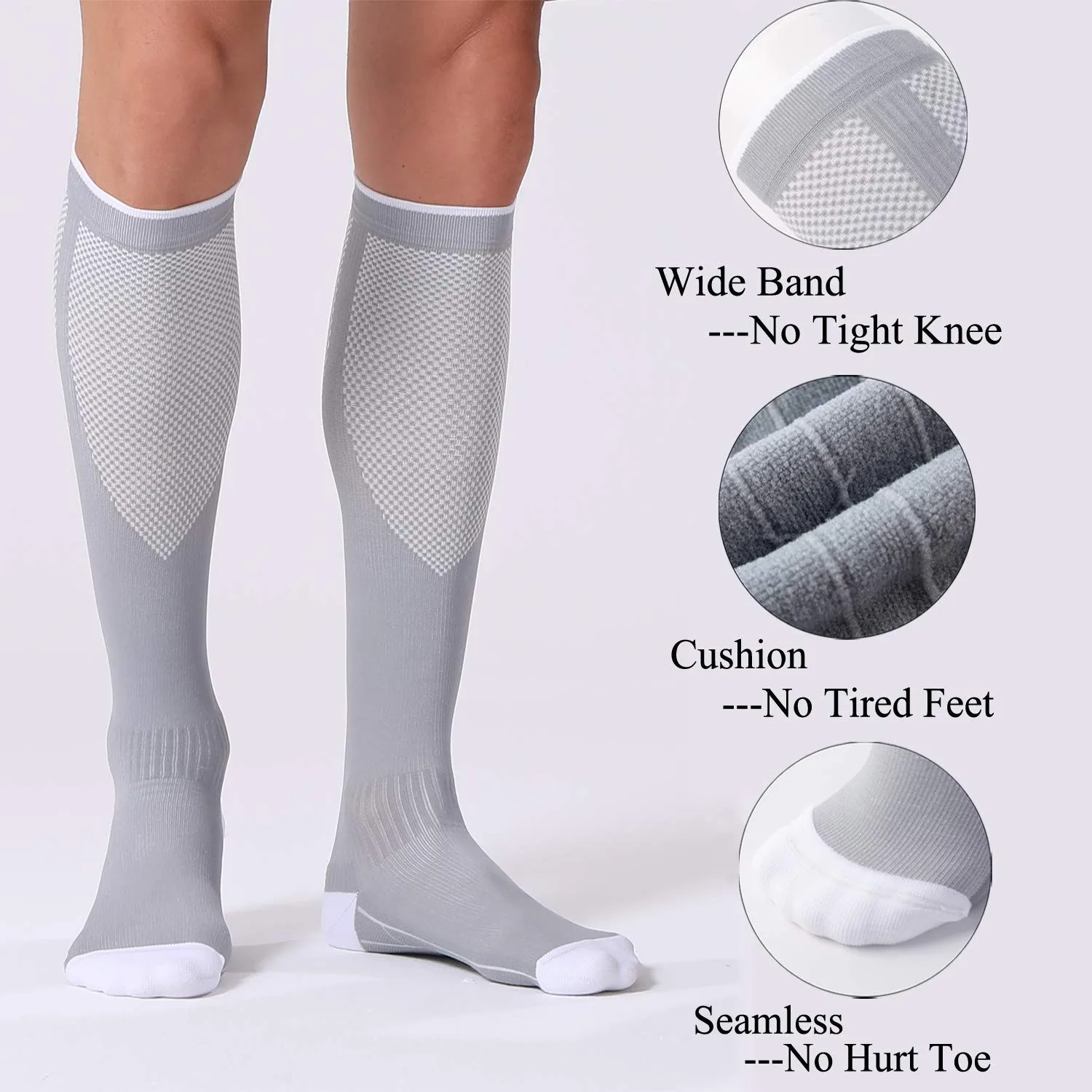
- Cushioned foot bed, seamless toe. The mundane details that decide whether a sock survives a marathon without a blister.
How to Use
Pull the sock up smoothly so the calf section sits below the knee crease without bunching behind the knee — a fold there creates a pressure ridge across the popliteal vessels. For performance, wear them during the session; for recovery, the stronger use case, put them on afterwards and keep them on for a few hours, or overnight only if a clinician has told you to. They should feel firm and supportive, not painful. Safety: if you are pregnant, compression stockings are commonly recommended, but discuss the right pressure class with your midwife or doctor rather than guessing. Do not wear compression with peripheral arterial disease or unmanaged heart failure. Stop and reassess if you get numbness, tingling or discoloured toes. And to be clear about what these are not: sudden one-sided calf swelling, heat and pain needs urgent medical assessment for DVT — do not put a sock on it and carry on.
Specifications
| Type | Graduated compression calf sock |
|---|---|
| Fit | Men’s and women’s, size by calf circumference |
| Coverage | Foot to below the knee |
| Fabric | Breathable moisture-wicking elastane blend |
| Foot | Cushioned sole, seamless toe closure |
| Best for | Running, cycling, hiking, travel, standing shifts |
| Primary benefit | Recovery and reduced soreness (not performance gains) |
| Compression level | Variant dependent — see selected option |
Care & Maintenance
Machine wash cool, gentle cycle, air dry. Never tumble dry: heat degrades the elastane that provides the compression, and a stretched-out sock is just a sock. Skip fabric softener. Replace when they go on too easily.
What’s in the Box
1 pair of graduated compression calf socks.
Reviews
There are no reviews yet.