Why Open-Toe Is the Sensible Choice
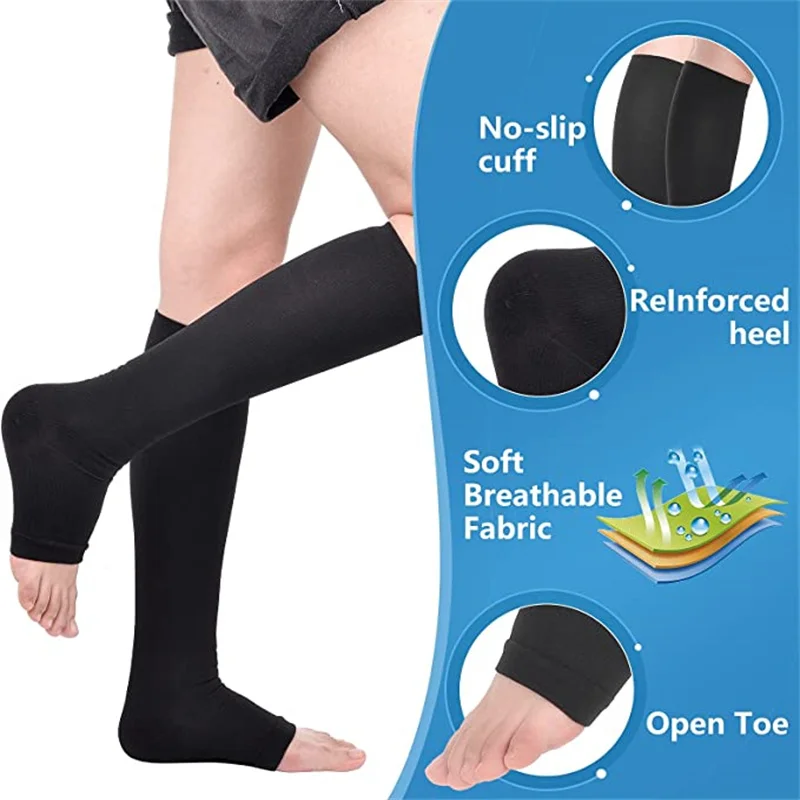
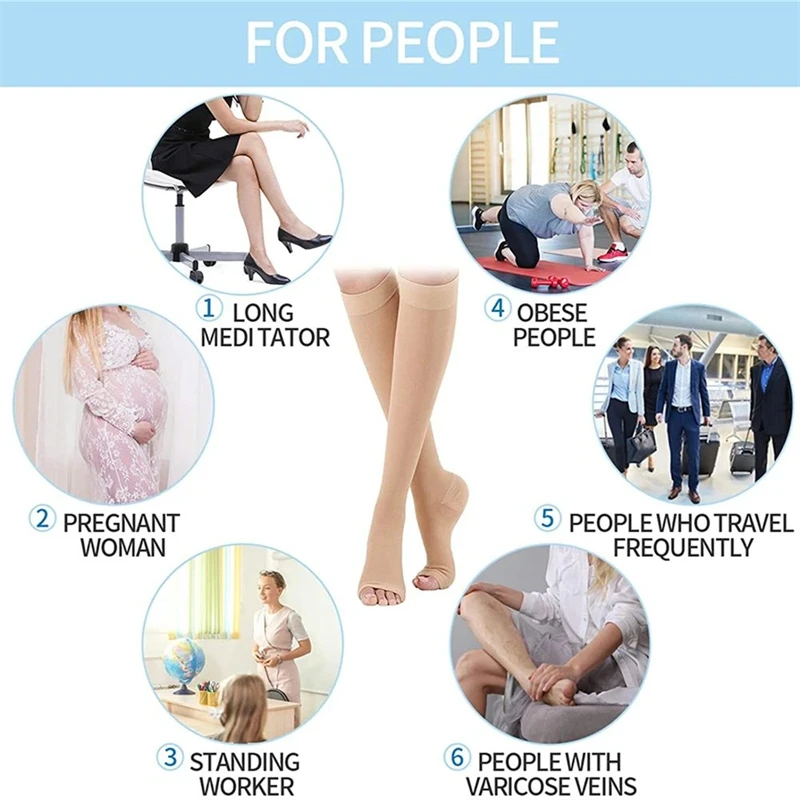
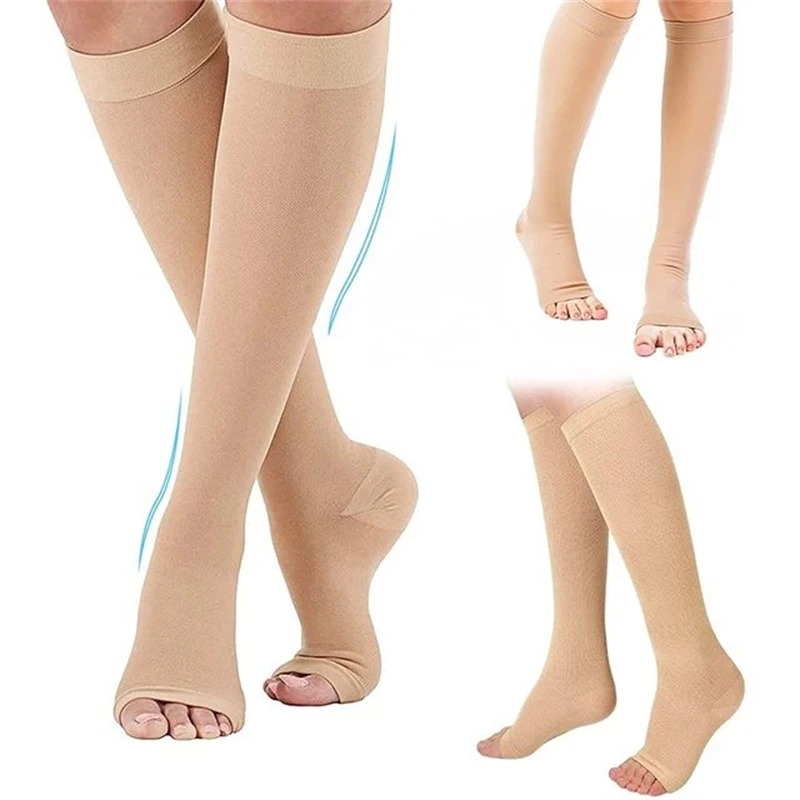
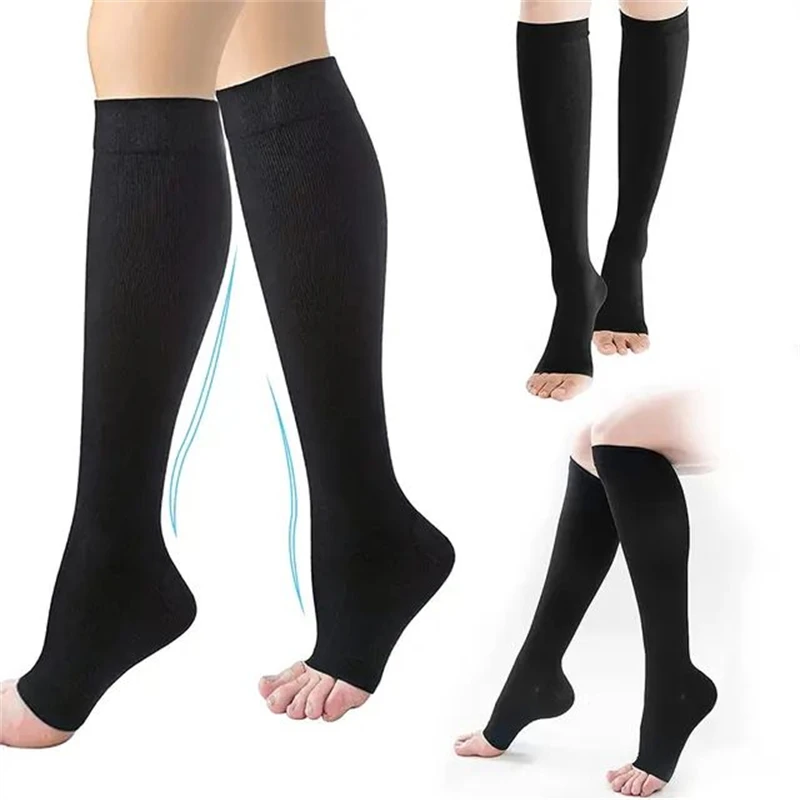
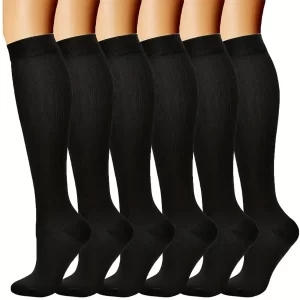
These are knee-high toeless compression socks at $1.99 a pair, in nylon, unisex, sizes S–M through XXL. The open toe exists for two practical reasons. First, it lets you see and check your toes – colour and temperature are how you know compression is fitted correctly rather than cutting off circulation. Second, compression garments are genuinely difficult to pull on, and an open toe lets you use a slip aid and get your foot through far more easily.
Key Benefits
- Open toe. Check toe colour and temperature at a glance, and get the sock on far more easily.
- Knee-high. Full lower-leg coverage, which is where blood pools when you stand or sit for hours.
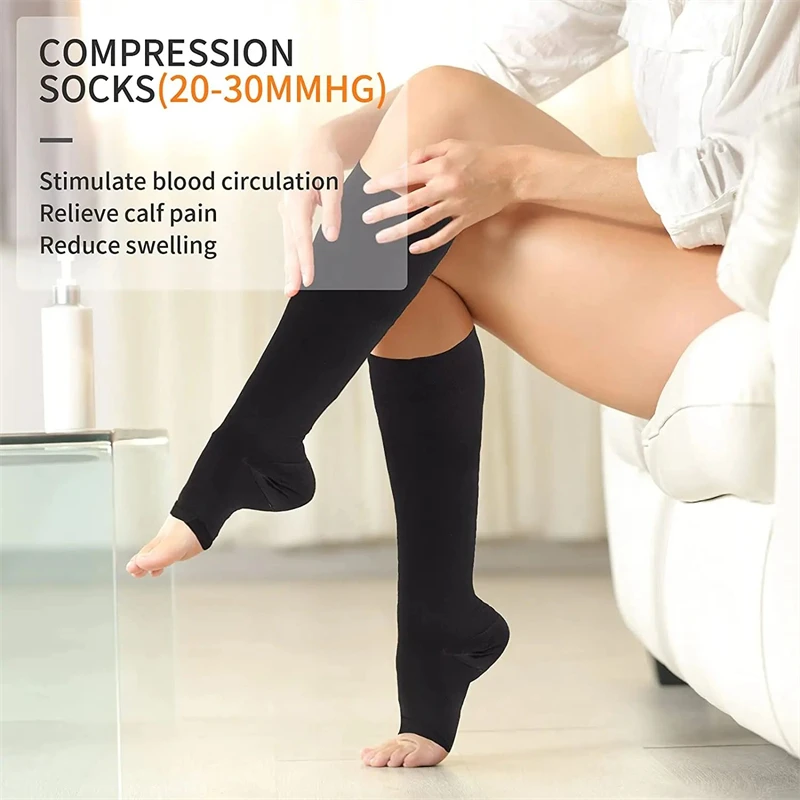
- Supports tired, aching legs. Standing all day, long flights, long shifts.
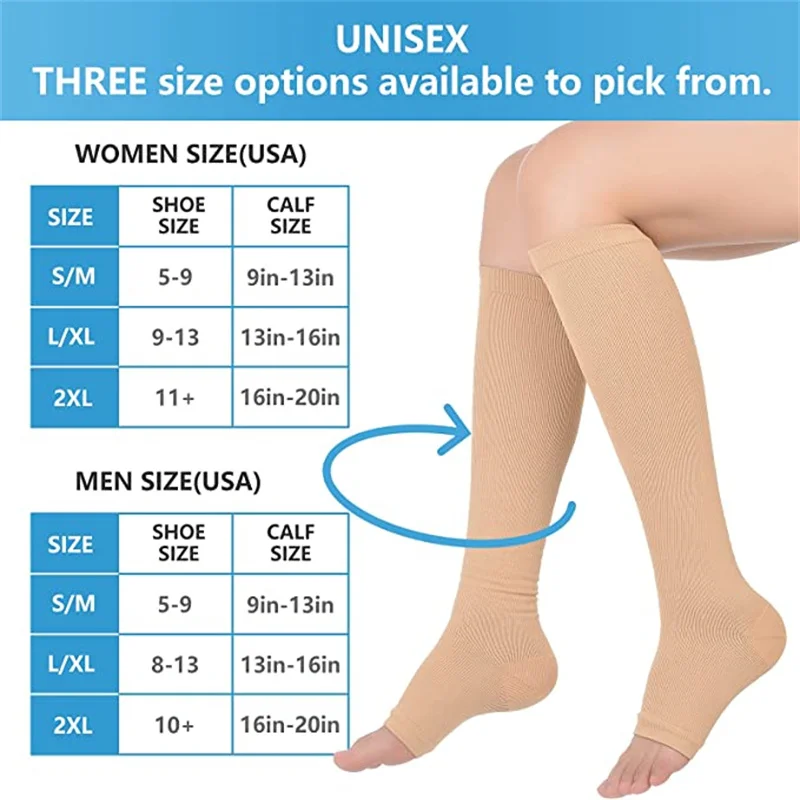
- Unisex, S–XXL. Sizing that actually goes up to a real range.
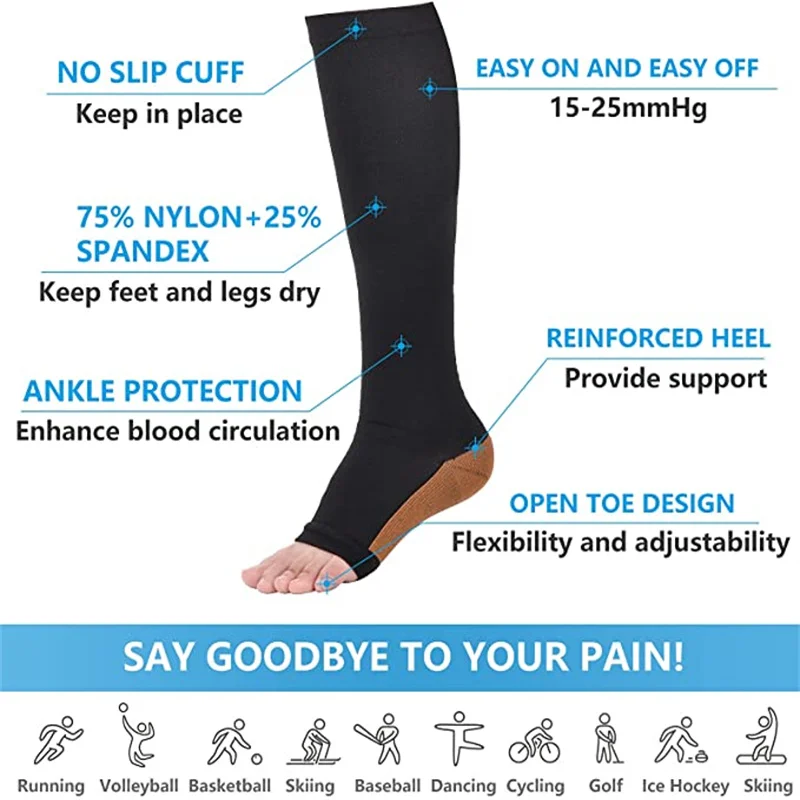
- Nylon knit. Thin enough to wear under normal socks or trousers.
How to Use
- Put them on first thing in the morning, before your legs have had a chance to swell.
- Roll them up the leg rather than yanking – bunched fabric creates a tourniquet band, which is the opposite of graduated compression.
- Check your toes after 20 minutes. They should be warm and normal in colour. Pale, blue or numb toes mean the sock is too tight or badly sized.
- Wear during the day and take them off at night unless a clinician has told you otherwise.
Specifications
| Type | Toeless knee-high compression socks |
|---|---|
| Height | Knee-high |
| Toe | Open / toeless |
| Material | Nylon |
| Sizes | S–M, L–XL, XXL |
| Gender | Unisex |
| Best for | Tired and aching legs, varicose veins, standing work, travel and flights |
Care & Maintenance
Machine wash cool and air dry. No tumble dryer and no fabric softener – both destroy the elastic fibres that generate the compression.
What’s in the Box
- 1 x Pair of toeless compression socks
Frequently Asked Questions
Why toeless?
Two reasons. You can see your toes, which is how you check the compression is not too tight – toes should stay warm and normal in colour. And an open toe makes a compression sock, which is genuinely hard to pull on, far easier to get on.
Do compression socks help varicose veins?
They are a standard conservative measure for the symptoms – aching, heaviness and swelling – and many people find real relief. They do not remove existing varicose veins. If veins are painful, hard, or the skin around them changes, see a clinician.
When should I put them on?
First thing in the morning, before swelling starts. Putting compression onto an already-swollen leg is uncomfortable and less effective.
How tight is too tight?
If your toes go pale, blue, numb or cold, the sock is too tight or the wrong size – take it off. Compression should feel snug and supportive, never painful.
Can I wear them on a flight?
Yes, it is one of the most common uses. Sitting still for hours lets blood pool in the lower legs, and compression counteracts that. Put them on before you board.
Reviews
There are no reviews yet.